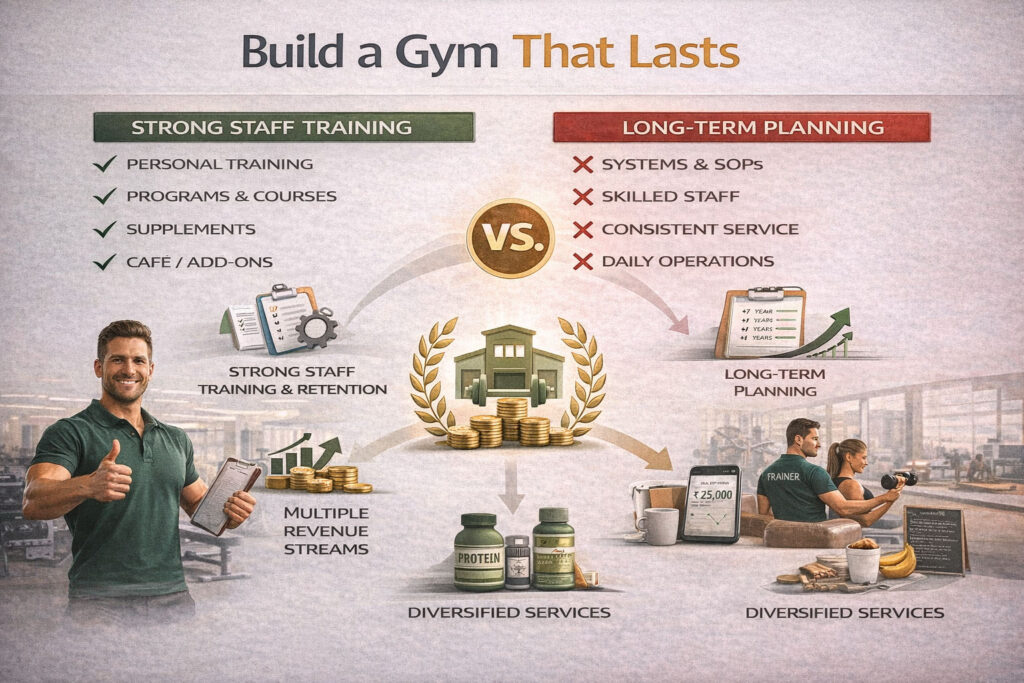






While starting a gym may seem like an exciting and rewarding venture, the reality is that while demand for fitness continues to rise in India, people are also becoming more aware of the need to spend money on their health. However, despite this overall positive business climate, the vast majority of gyms will close after two to three years of operation, due not to a lack of demand but rather to a history of avoidable business errors.
Success in running a fitness facility requires much more than a simple desire to help others get fit – there is also a need for financial discipline, operational clarity, elevated levels of service, and the ability to think and act as a long-term business entity. Failure to address any of these specific areas quickly places your business under significant stress.
Poor Location Planning
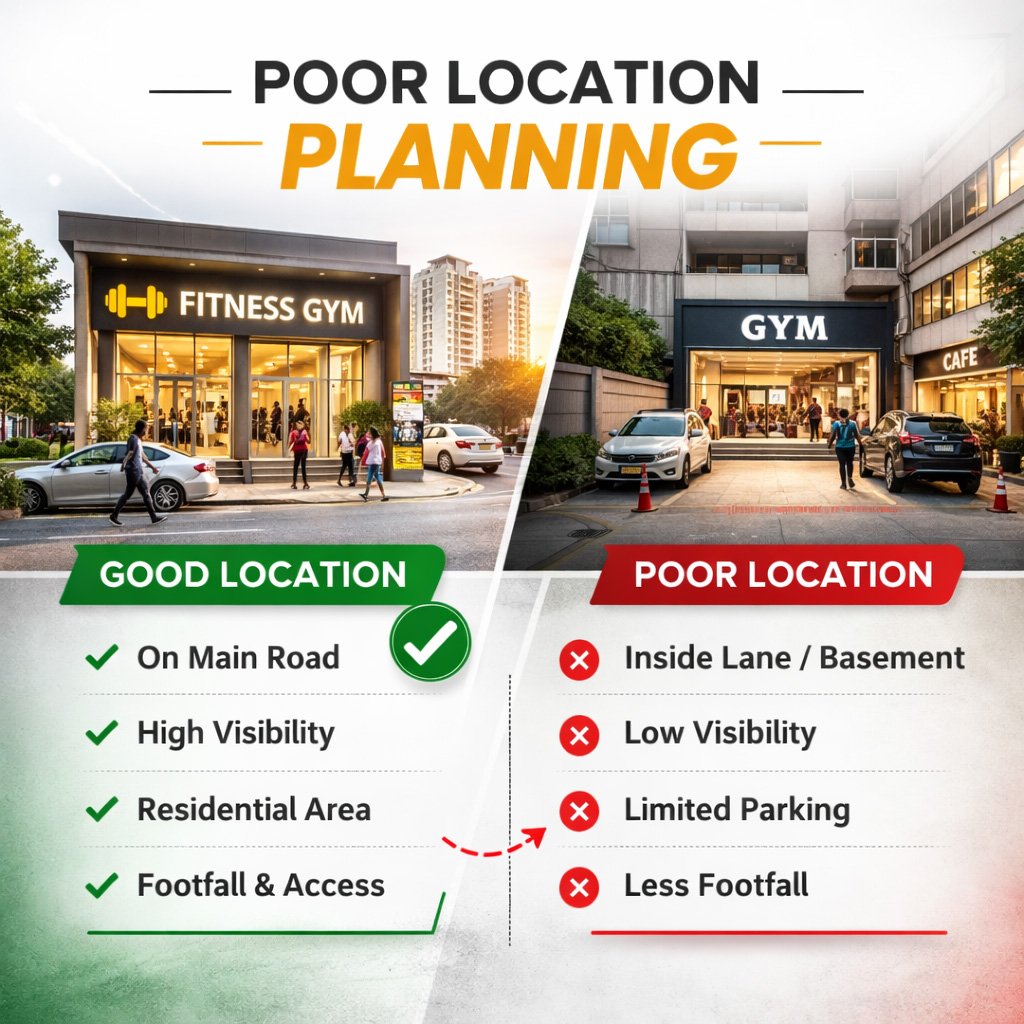
Many gyms struggle to grow due to poor location planning. A gym can have the best equipment and aesthetics, but having the right area to draw clients in can affect its growth. The accessibility, visibility, surrounding population of residences and/or worksites, and how nearby competitors are doing also affect how many new clients will walk in the door.
Unfortunately, too many owners rent or lease space based only on price or if the space is available rather than determine if it’s in the right market. Over time, this strategy becomes limiting. To learn more about how some professional gyms lay out continue using a professional location strategy, here are some commercial gyms to look at as they showcase how they develop commercial gym markets through the use of virtual tours.
High Operational Expenses

The second key factor in generating cash is large operational costs affecting profitability of a gym. Even if the gym is able to generate revenue; there are many times gyms will not be profitable merely because of their monthly operating expenses.
In most cases, the majority of a gym’s expenses can be attributed to the large rental amount paid for their facility. A gym may provide a fantastic location to build a membership base or have a beautiful gym, or have low rental prices, however if their rental amount is not in line with the amount of expected member dues, the gym will be under constant pressure to operate on a monthly basis. For this reason, successful gym owners understand that generating revenue is only part of the equation and that maintaining a stable cash flow from month to month will be of equal importance to the overall success of their business.
Poor Financial Planning

One of the most frequent mistakes made by new gym owners is insufficient financial planning from the outset. A first-time gym owner often spends too much money on gym interiors and fitness equipment but does not allow for working capital until he/she has enough members to sustain his/her operations, usually for the first three or four months. Hence, there are fewer members when the new facility opens than would have been anticipated, so revenue doesn’t equal expenses at the start.
Without a financial cushion, it is difficult for any well-built gym to maintain operations. Therefore it is essential that a well-constructed financial plan always has a clear picture of total investment, monthly operating expenses, projected growth over the next couple of years, and the time period it will take to reach breakeven.
Low-Quality Equipment Decisions
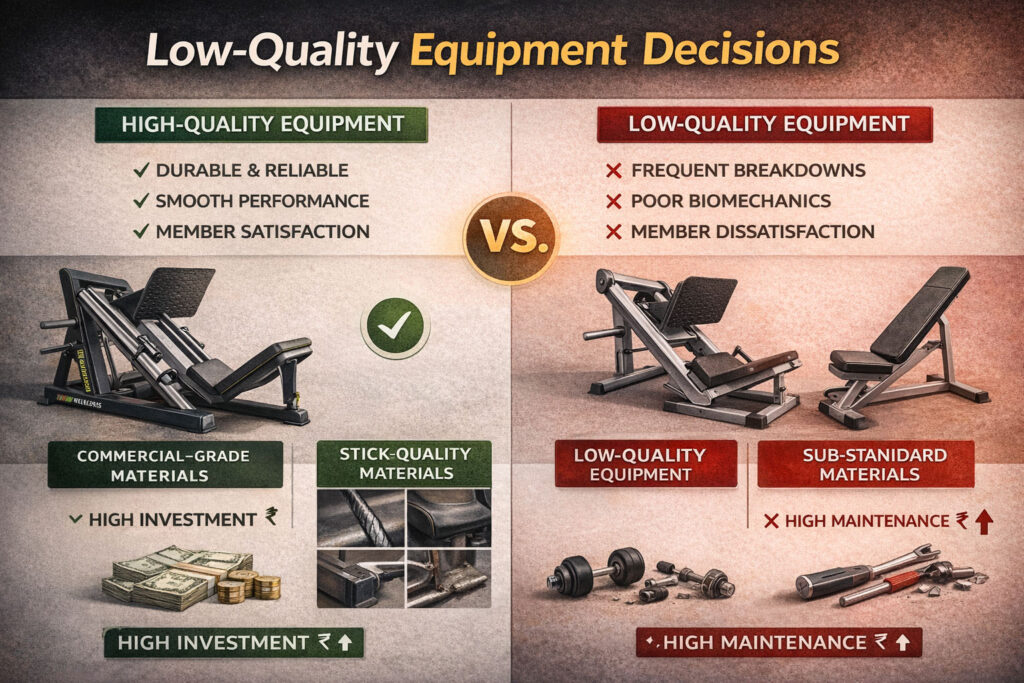
The decision made about gym equipment is a critical element in the eventual success or ongoing challenges faced by the gym. To try to reduce the amount spent upfront, some gym owners will choose to purchase lower-quality or sub-standard equipment instead of best quality equipment, it usually will result in frequent breakdowns, biomechanically poor performance, member dissatisfaction, and increased costs to maintain the equipment over time.
Members are more educated than ever before and they expect a certain level of service; therefore, when a piece of equipment feels uncomfortable or does not function correctly, retention will be negatively impacted. When watching videos demonstrating the performance and configurations of commercial-grade equipment, the distinction between well-designed and poorly designed machines can easily be seen. Because of this, it is absolutely essential that the new gym is equipped with high-quality, durable equipment.
Low Member Retention
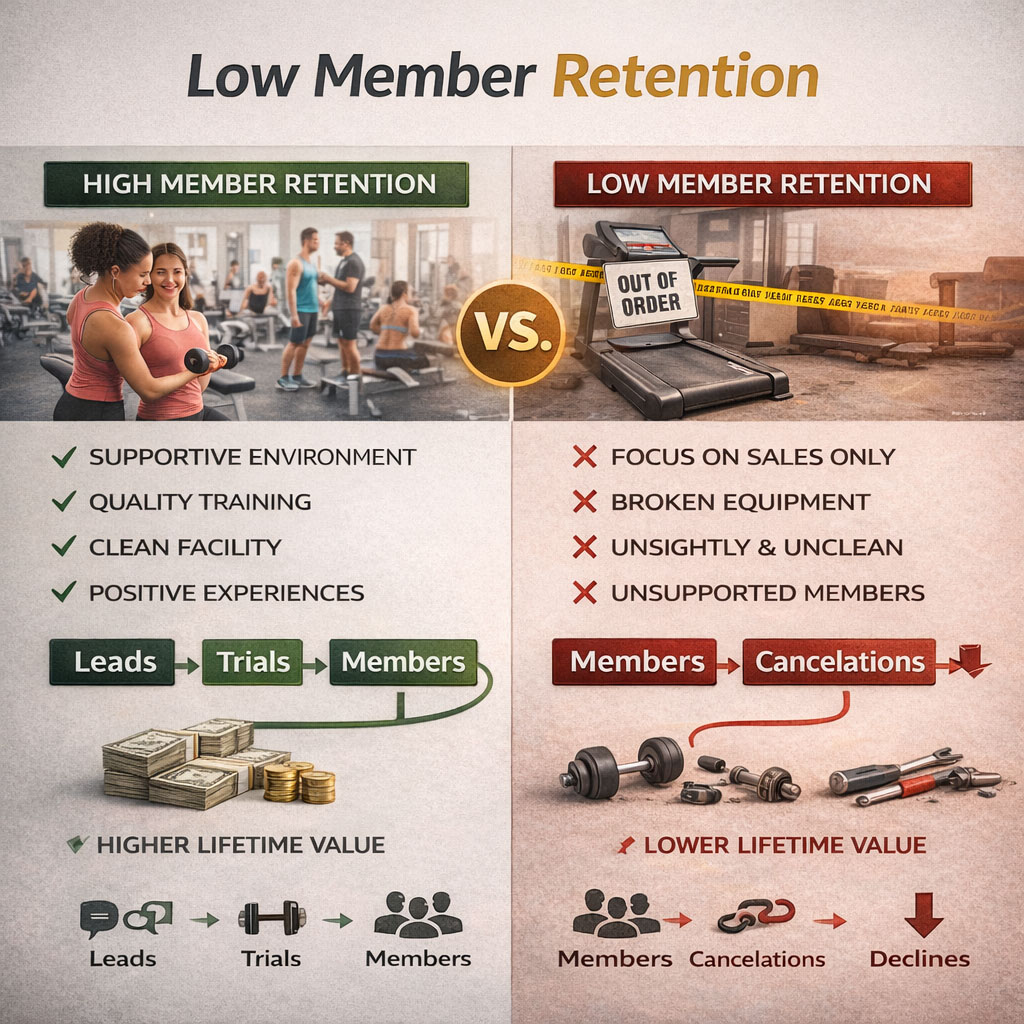
Many gyms have the correct set-up, yet due to an excessive focus on the sale of membership rather than retaining members, they remain in trouble. Retention will be the determining factor in future profitability. If members are not renewing, the business is going to continuously depend upon new sales for survival.
Key factors that will determine retention level include; quality of service, level of support via trainers, cleanliness of the facility, availability of workout equipment and general member experience for all members. Gyms that create an inviting and supportive environment for all members have a greater tendency to have members renew and provide them with better word-of-mouth referrals.
Weak Marketing and Sales Systems
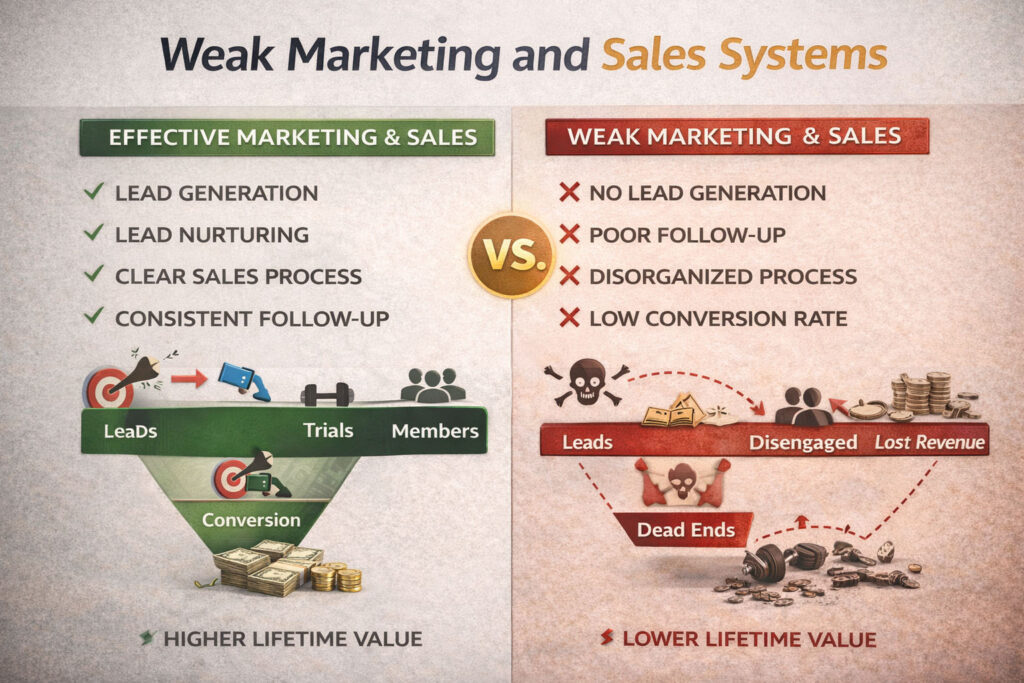
The marketing & sales strategies of many health clubs and studios have not kept pace with their physical growth. Many only offer introductory/promotional pricing at launch time or for temporary periods of time. A successfully run club has a reliable mechanism (to generate leads), (to follow up), (to convert trial memberships), and (to keep their current members engaged).
Without having a structured approach – they lose leads (potential members), thus putting the club’s revenue in jeopardy; using marketing to grow your facility is not a one-time task; but rather should be an ongoing system that will help you produce growth month after month..
Inadequate Staff Training and Retention
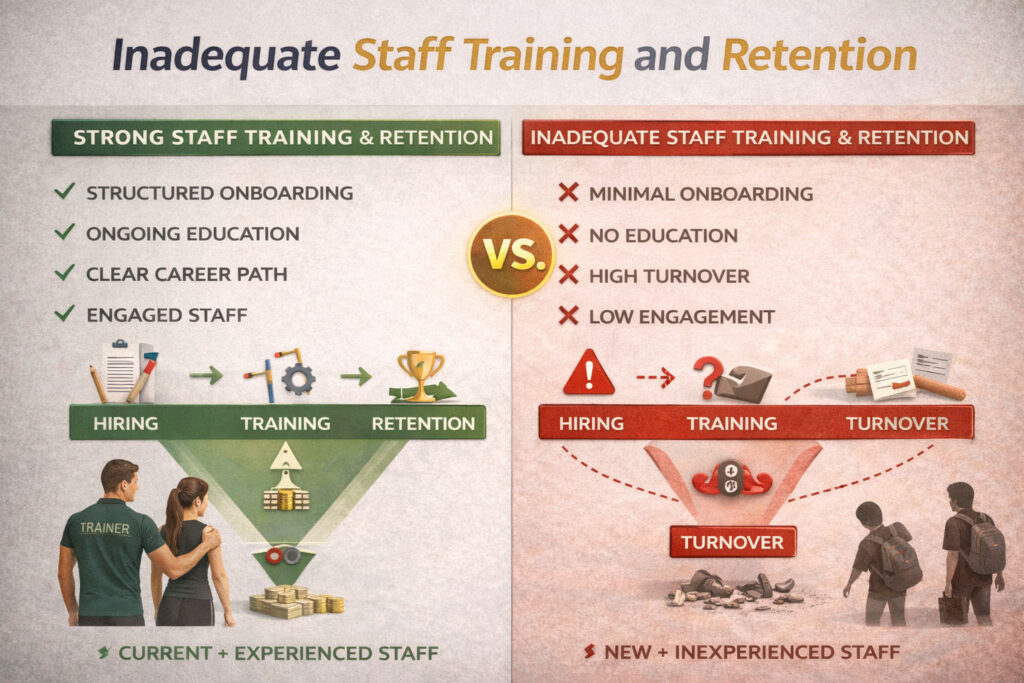
Staff play an important part in the member journey; the experience that member have will be influenced directly by the trainers that they work with and by the trainers or sales associates. When staff do not receive sufficient training or they turn over frequently, it creates inconsistency and will cause a breakdown in the potential relationship that can exist between the gym and it’s members.
Many gyms struggle in creating these challenges because they struggle to retain great trainers and thus, build a solid sales team to improve retention as well. Investing in training, creating a positive work environment, and providing opportunities for growth will create a stable team that helps to create success for the long-term.
Poor Service Quality
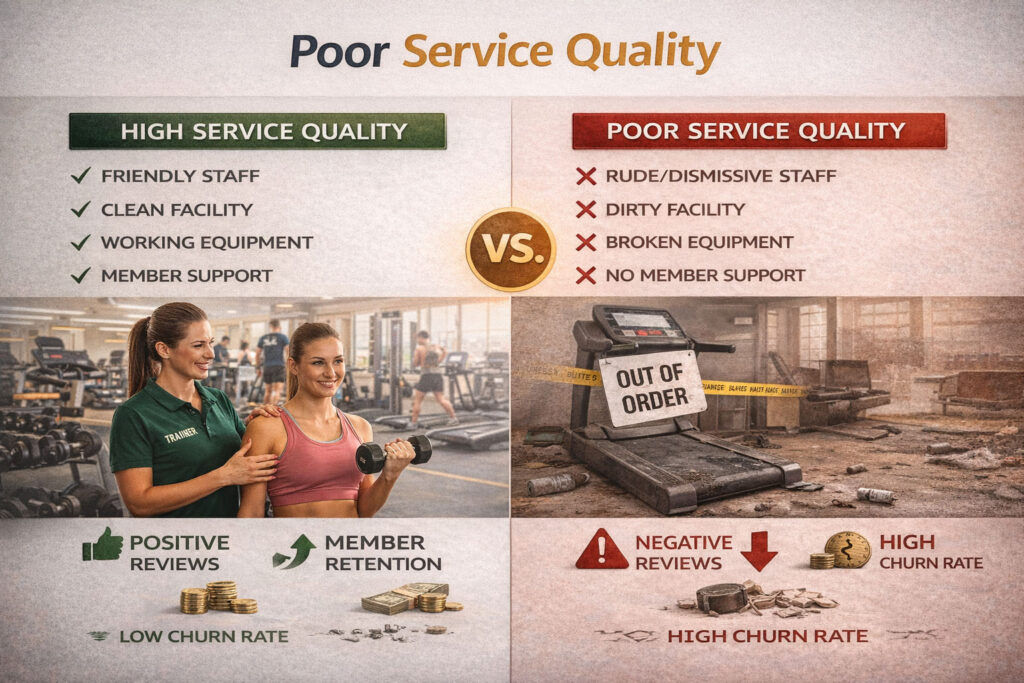
Members today expect more than just access to equipment. They expect a clean, safe, motivating, and well-managed environment. Small issues like poor hygiene, broken machines, or unresponsive staff can quickly damage a gym’s reputation.
Consistent service quality builds trust, improves retention, and drives referrals. In contrast, inconsistent service creates negative word-of-mouth that is difficult to recover from.
Lack of Long-Term Planning
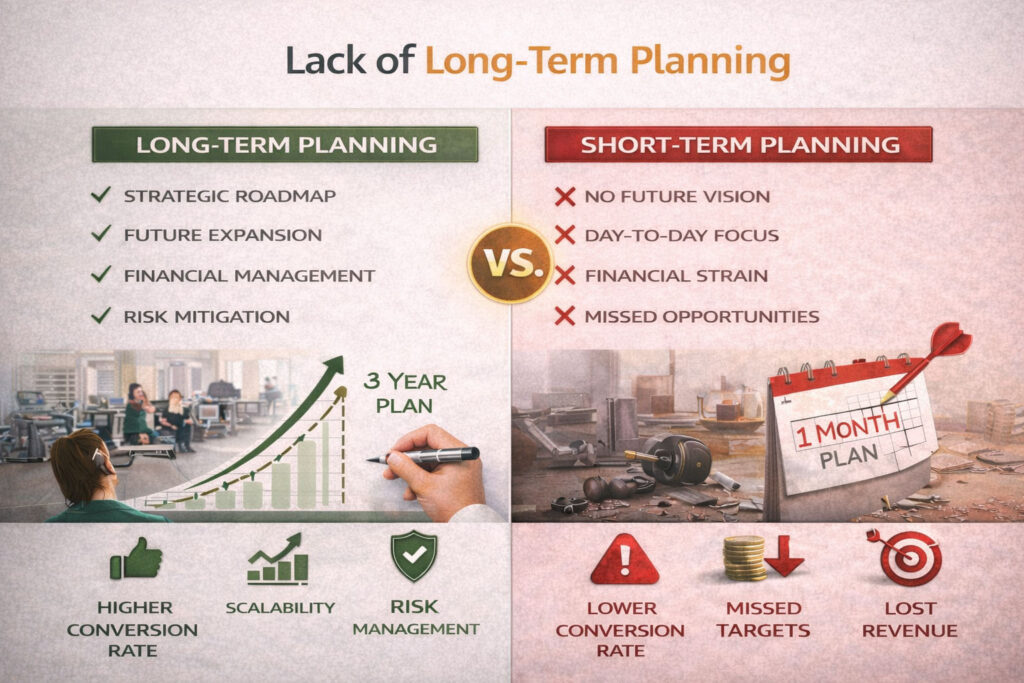
A lack of long-term planning often limits growth. Many gym owners focus on opening the facility but do not think about how it will evolve over time. A strong gym business needs a clear identity, a growth plan, and a vision for upgrades or expansion.
Without a long-term approach, gyms become stagnant and eventually lose their competitive edge.
Absence of a Clear Sales Process
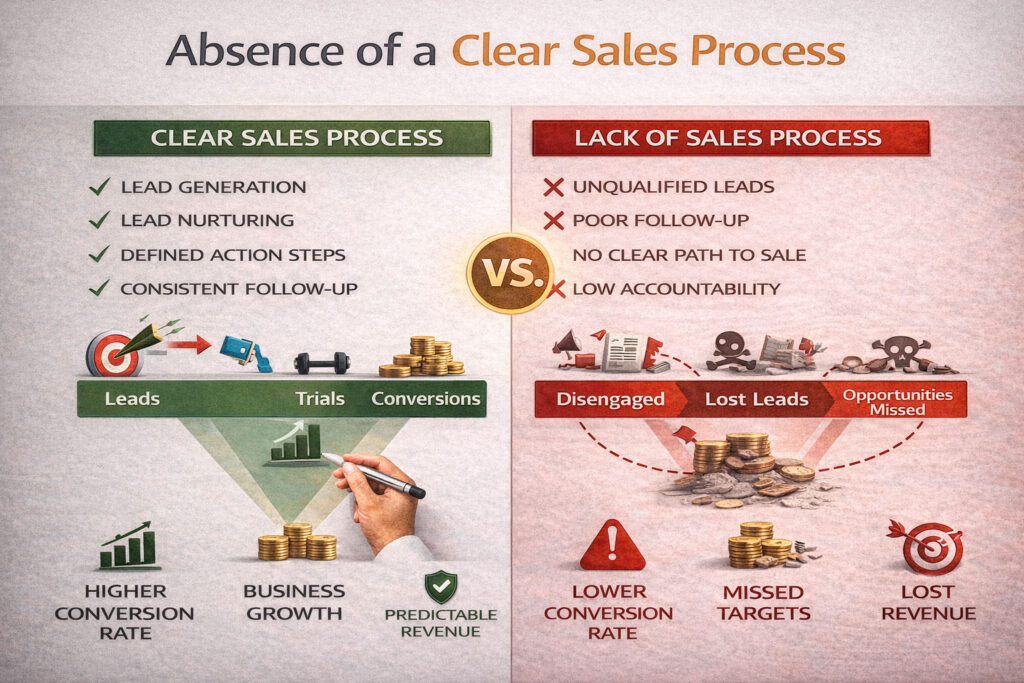
One of the most overlooked reasons gyms fail is the absence of a structured sales funnel. Many gyms rely only on walk-ins or referrals instead of building a proper system to capture leads, track enquiries, and follow up consistently.
Gyms that treat sales as a structured process with defined follow-ups, conversions, and renewal systems grow far more consistently.
Revenue Diversification & Founder Independence
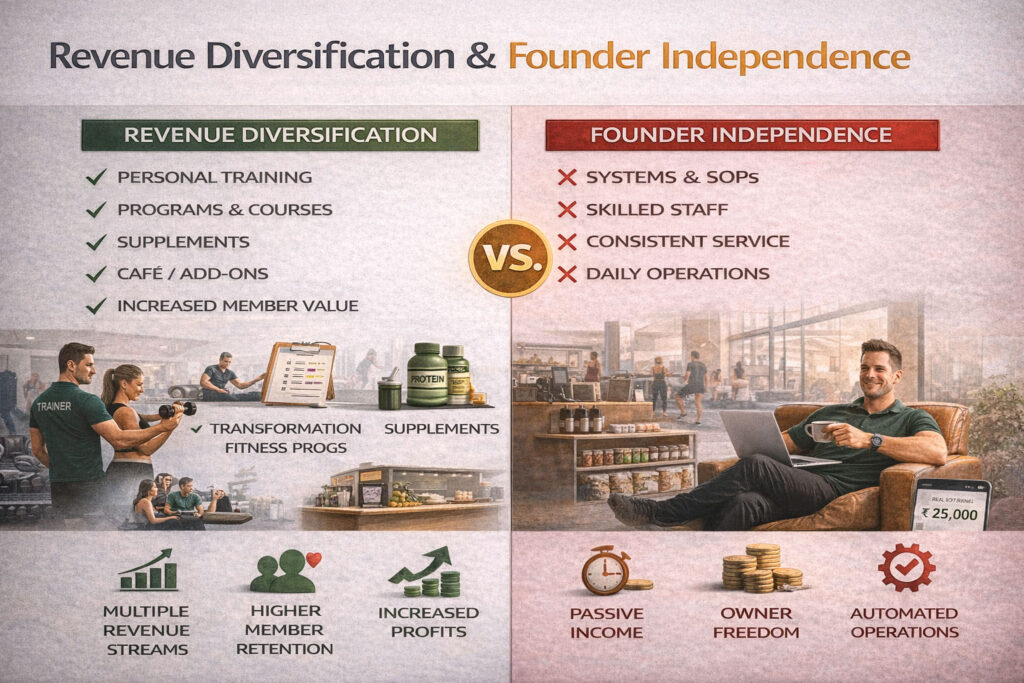
Many gyms hit a ceiling because they depend only on membership fees, while profitable ones increase each member’s value through personal training, transformation programs, supplements, and simple add-ons like a café, which strengthens revenue and retention.
At the same time, many gyms fall into the founder burnout trap, when the owner is always present, the gym’s energy drops the moment they step away. The solution is to build simple systems and SOPs for sales, service, and daily operations so the gym can run smoothly even without the owner being physically present every day.
The Into Wellness Perspective
Across India, we collaborate with both new and established gym owners at Into Wellness. There are common themes among these members, these gyms invest in the right type of equipment, implement effective design and layout, hire and develop well-trained staff, and put a strong emphasis on business planning will see better performance than gyms that do not follow this model.
When building a successful business, it isn’t necessarily about having more money to spend; it is rather about making informed and strategic decisions throughout all stages of the gym’s development.
Building a Gym That Lasts
As the fitness market grows quickly in India there are lots of opportunities. The reason gyms fail isn’t that people aren’t passionate about fitness; instead, gyms usually experience failure due to issues like poor planning or execution problems.
When the key factors of location, equipment, finance, service, and marketing plan are aligned; it creates a consistent, sustainable and profitable Gym business.
Frequently Asked Questions
Why do most gyms fail?
Most gyms fail due to poor financial planning, high fixed costs, weak retention, and lack of structured marketing and sales systems.
What are the common mistakes gym owners make?
Common mistakes include choosing the wrong location, buying low-quality equipment, overspending on rent, and not investing in staff training.
How can gym failure be avoided?
Gym failure can be avoided through proper planning, controlled expenses, strong member retention, good equipment, and consistent marketing systems.
Is high rent the biggest reason gyms shut down?
Yes, high fixed rental cost combined with low or inconsistent membership growth is one of the most common financial challenges gyms face.
Does equipment quality impact gym success?
Yes, high-quality equipment improves member experience, safety, and retention, which directly affects revenue and long-term profitability.